Maximize Space: Best Kitchen Cabinet for Small Appliances
When it comes to managing kitchen counter space, small appliances can often be the culprit of clutter. To optimize your kitchen's layout and functionality, investing in the right kitchen cabinet to store small appliances is crucial. Not only does it keep your workspace clear, but it also ensures easy access when you need them.
With a plethora of cabinet options available, choosing the right one might seem overwhelming. This guide will walk you through the various types of cabinets, their features, and how to choose the perfect one for your small appliances. Let's dive in and streamline your kitchen storage solutions!
Types of Cabinets for Small Appliances
The first step in finding the best kitchen cabinet to store small appliances is understanding the different types available.


Kitchen cabinets come in various styles, sizes, and configurations. Some popular choices for storing small appliances include base cabinets, wall cabinets, and pantry cabinets. Each type has its unique advantages, catering to different storage needs.
Base Cabinets
Base cabinets are installed directly on the floor and usually range from 24 to 36 inches in depth. They provide ample storage space for small appliances like blenders, food processors, and stand mixers. Consider pull-out shelves or lazy Susans to optimize internal space and make accessing your appliances more convenient.


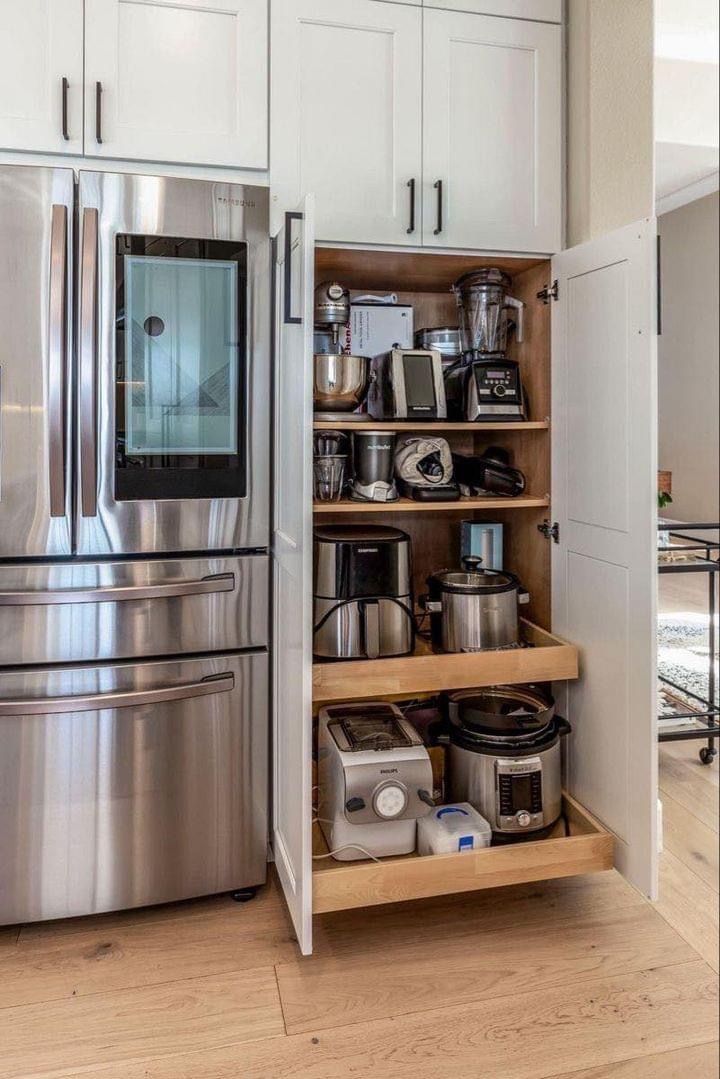
For deeper storage, opt for full-overlay doors that hide the cabinet frame, allowing you to maximize the opening and accommodate larger appliances. Additionally, integrating appliance garages into your base cabinets can keep small appliances easily accessible yet out of sight.
Wall Cabinets
Wall cabinets are mounted on the wall, typically around 12 to 18 inches deep. They are ideal for storing lightweight, smaller appliances such as toasters, coffee makers, and mixers. Incorporate glass or open shelving designs to showcase your appliances and create a visually appealing backdrop.
For better organization, use shallow-depth wall cabinets or install pegboard or hanging racks inside to keep appliances off the shelves and easily accessible. This reduces countertop clutter and simplifies navigation around your kitchen workspace.


Key Features to Consider
After deciding on the cabinet type, look for features that make managing your small appliances more efficient.
Customization options such as adjustable shelves, roll-out trays, and built-in organizers help tailor the cabinet space to your specific appliance sizes and quantities. Opt for soft-closing hinges and doors that make opening and closing the cabinets gentle and seamless.
Organization and Accessibility
Pristine organization maintains a tidy kitchen and reduces time spent searching for misplaced appliances. Deep drawers, open shelving, and appliance lifts make it easy to see and retrieve your small appliances at a glance.


Utilize drawer dividers to contain loose items, and consider using elevate shelves to position appliances at the perfect height for use and storage, keeping you from straining your back. Pull-out shelves and Reagan hinges simplify access to awkwardly shaped or tucked-away spaces.
Multifunctional and Space-Saving Designs
Making the most of your kitchen's square footage involves incorporating multifunctional and space-saving design elements into your cabinet choices.
Integrate a peninsula or island with cabinet storage to add additional workspace and storage while dividing your kitchen visually. Stacked cabinets or cabinet towers maximize wall space, providing added storage in compact kitchens. Additionally, blend your small appliance storage with other kitchen functionalities, like a built-in coffee station or baking center.
Choosing the Perfect Cabinet for Your Kitchen
Selecting the right kitchen cabinet to store small appliances depends on your unique storage needs and kitchen layout.
Measure your appliances and sketch your cabinet design before purchasing to ensure proper fit and functionality. Factor in your kitchen's available space, existing cabinet styles, and your budget when making your decision. Consulting with a professional designer can also provide valuable insights tailored to your specific requirements.
Maximizing Storage Capacity
When dealing with limited kitchen space, maximizing your cabinet's storage capacity is essential. Encourage multipurpose usage of items and invest in vertical organizers to stack or hang lightweight appliances.
Opt for full-height cabinets that reach the ceiling to utilize all available vertical space. Install cabinet crown molding not only for aesthetic appeal but also to create a seamless visual connection between your cabinets and the ceiling, creating a more cohesive and spacious look.
Blending Style and Functionality
Your chosen kitchen cabinet to store small appliances should complement your overall design and color scheme while serving its intended function.
Opt for cabinets with clean lines, uniform hardware, and a cohesive material palette to create visual harmony throughout your kitchen. Consider incorporating glass or open shelving to showcase your appliances and bring visual interest to your space.
Ultimately, selecting the perfect kitchen cabinet to store small appliances is about finding a harmonious balance between form and function. By choosing a cabinet that addresses your specific storage needs, enhances your kitchen's functionality, and complements your overall design aesthetic, you'll create a streamlined, clutter-free workspace tailored to your unique lifestyle.
Related Articles

Maximize Space: Best Methods for Storing Large Kitchen Appliances
The carefully planned storage of large kitchen appliances isn't just a task for an organized home; it can significantly improve your kitchen's safety...

Maximize Space: 10 Inspiring Small Kitchen Cabinet Configurations
When it comes to small kitchen cabinet configurations, space optimization is key. We've all dreamed of having a sleek, organized, and efficient kitchen space...

Maximize Small Space: Clever Storage Ideas for Compact Kitchen Appliances
When it comes to small kitchen appliances, storage can be a significant challenge, especially in compact kitchens. Overcrowding can lead to clutter, making it...

Maximize Space: Clever Kitchen Ideas to Hide Small Appliances
Transforming a compact kitchen into a sleek, functional space often involves clever storage solutions. One such challenge is concealing small appliances, not...

Maximize Space: Storage Solutions for Small Kitchen Appliances
Embracing a minimalist lifestyle doesn't mean you have to compromise on functionality, especially in the heart of your home - the kitchen. While small...

Maximize Your Space: Cozy Small Kitchen with Bar Table
Transforming a small kitchen into a functional and stylish space can be a rewarding challenge, and incorporating a bar table is a fantastic way to maximize...