Kitchen Employee Handbook: Essential Guidelines
A comprehensive and well-structured employee handbook is vital for any thriving business, and this holds particularly true for the bustling food industry. For kitchens, a well-outlined employee handbook isn't just an HR requirement, but a strategic tool that promotes a smooth operation, consistent quality, and enhanced safety.
This guide explores key components and best practices for creating an effective kitchen employee handbook. We'll delve into core topics like safety protocols, team dynamics, and food handling techniques, ensuring your handbook is not just a legal necessity, but a practical resource that elevates your kitchen's efficiency and standards.
Establishing a Safe and Efficient Work Environment
Safety is paramount in any kitchen. A well-documented safety protocol helps prevent accidents, streamlines operations, and ensures compliance with health and labor regulations.


Regular safety training and clear communication of these protocols are essential. Your handbook should include:
Mandatory Safety Equipment
Detail the specific Personal Protective Equipment (PPE) required, such as non-slip shoes, heat-resistant gloves, and hairnets, along with when and how to use them.


Provide visual aids, like photos of approved PPE and safety signage, to enhance understanding and reinforce compliance.
Emergency Procedures
Outline detailed procedures for various emergencies, including fires, chemical spills, and injury incidents. Ensure all employees know how to operate safety equipment like fire extinguishers.
Regularly update and review these procedures, and schedule emergency drills to keep your team prepared and confident in case of a real emergency.


Promoting Consistency in Food Preparation and Service
A standardized approach to food preparation and service ensures your kitchen maintains high-quality and consistency.
Your employee handbook should articulate these standards, providing detailed guides on:
Recipe and Preparation Guidelines
Document standard recipes, portion sizes, and plating instructions. Include specific cooking techniques and equipment usage to maintain consistency across shifts.


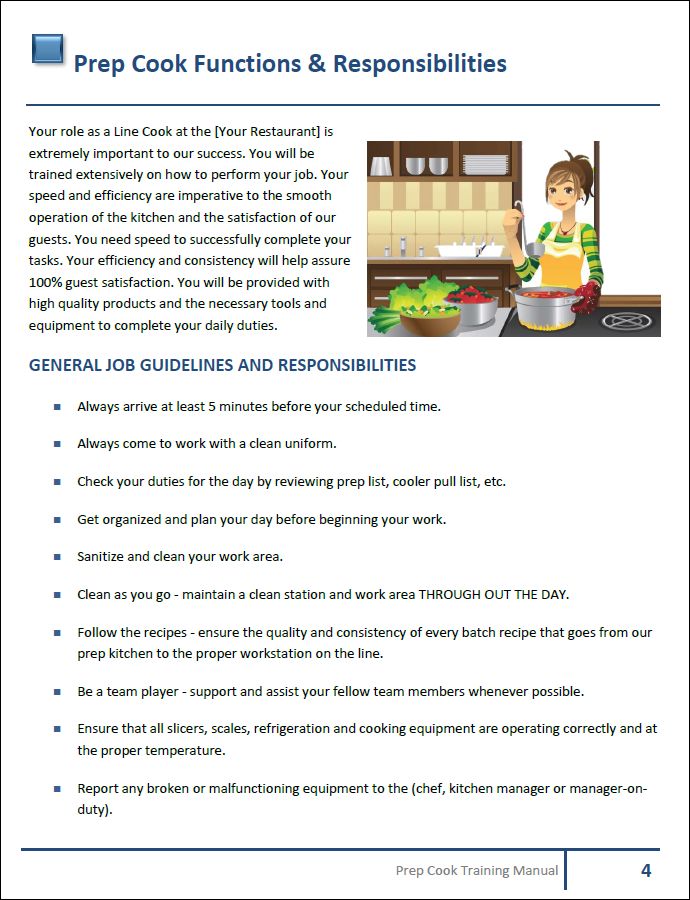


Regularly update these guidelines to reflect changes in menus and ensure all staff are trained on the latest recipes and methods.
Quality Control and Waste Management
Establish a system for quality control, outlining checks throughout the production process, dropoff, and delivery. Set clear standards for waste management to minimize food waste and maximize cost efficiency.
Communicate these standards clearly and provide regular training to maintain a culture of quality and waste reduction.
Fostering a Positive and Productive Team Culture
A harmonious team environment boosts morale, increases productivity, and promotes a positive work culture. Your handbook should address:
Team Roles and Communication
Clearly define each role within the team, including responsibilities and expectations. Encourage open communication and active collaboration among team members.
Establish a culture of respect, professionalism, and constructive feedback to promote a positive work environment and individual growth.
Conflict Resolution and Disciplinary Measures
Outline clear procedures for addressing conflicts and disciplinary actions. Promote fairness, consistency, and an opportunity for improvement in these processes.
Regularly review and update these protocols to ensure they remain relevant and align with your company's values and growth.
Your kitchen employee handbook is a living document, continually evolving and improving as your business grows. Regularly review, update, and communicate changes to keep your team informed and engaged. By fostering a culture of knowledge sharing and continuous learning, your handbook becomes more than just a manual; it becomes a refere
Related Articles

2023 Electrical Code Updates: Essential Kitchen Island Guidelines
The National Electrical Code (NEC) is updated every three years to ensure safety, functionality, and accessibility in electrical installations. As we welcome...

Commercial Kitchen Grease Trap Guidelines: Essential Rules & Best Practices
Grease traps are crucial components in commercial kitchens, playing a vital role in maintaining a clean and efficient environment, as well as preventing costly...

Office Kitchen Rules: Essential Guidelines for Employees
Creating a harmonious office environment often extends beyond workstations and meeting rooms, spilling into shared spaces like the office kitchen. Establishing...

Kitchen Sink Drain Pipe Size Code: Essential Guidelines for Homeowners and Plumbers
The kitchen sink is a crucial component in any home, and its efficient functioning relies heavily on the size and condition of its drain pipe. The drain pipe's...

Outdoor Kitchen Rules: Essential Guidelines
Creating an outdoor kitchen is an exciting way to expand your living space and enhance your home's value. With proper planning and adherence to guidelines, you...

Kitchen Dos and Don'ts: Essential Guidelines for Safe and Efficient Cooking
Imagine the kitchen, the heart of the home, buzzing with activity. Amidst the aroma of simmering meals and the ambient hum of gadgets, you're at the helm...