Maximizing Kitchen Efficiency: Optimize Pantry Space
The kitchen pantry position is a critical aspect of efficient kitchen design, often overlooked in the pursuit of aesthetics. It's not just about where you place your pantry; it's about how you position it for optimal functionality and accessibility.
Whether in a newly constructed home or a remodeling project, considering the pantry's placement can greatly enhance your kitchen's usability and flow. Let's delve into the intricacies of kitchen pantry positioning, its importance, and factors to consider when deciding where to place your pantry.
The Work Triangle Theory
At the heart of kitchen design is the work triangle, a concept developed by architect Ludwig Mies van der Rohe. This theory suggests that the sink, cooktop, and refrigerator should form a triangle, with each leg measuring between 4 to 9 feet. This principle is crucial for efficient kitchen workflow and should guide your pantry's positioning.


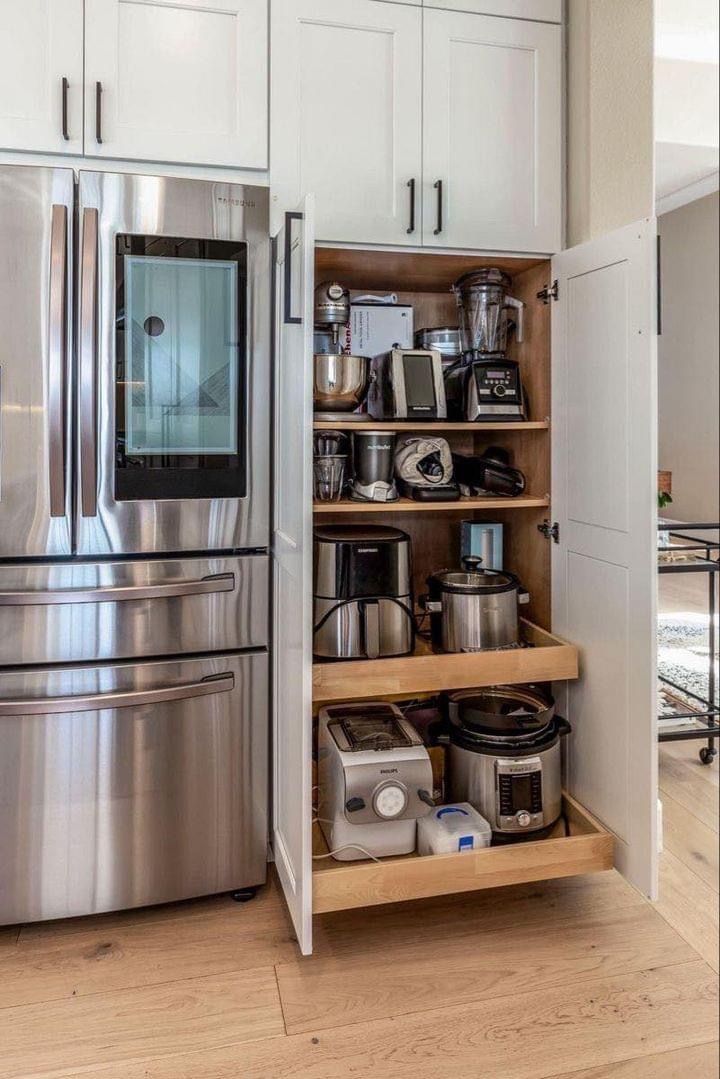
Ideally, your pantry should be conveniently located within or near this work triangle, ensuring quick and easy access to essential ingredients, utensils, and cooking tools.
Integrated Pantries
Integrated pantries are designed to blend seamlessly with the rest of your cabinets, offering a sleek, streamlined look. They are typically deeper than standard wall cabinets, providing ample storage space for dry goods, canned foods, and spices. These pantries are often positioned against a kitchen wall, perpendicular to the work triangle, offering convenient access to their contents.


However, for larger kitchens, integrating the pantry into the work triangle can create a handy supply center. This would involve placing the pantry between the cooktop and the refrigerator, making it easily accessible during meal preparation.
Stand-Alone Pantries
Stand-alone pantries, or butler's pantries, offer a dedicated space for food storage and prep work. They can be positioned in various ways, depending on your kitchen's layout. For smaller kitchens, situating the pantry off the kitchen but near the dining or living area can provide an ideal compromise between functionality and space.
In larger kitchens, a butler's pantry can be integrated into the overall design, positioned between the kitchen and another living area, such as a family room or home office. Here, it becomes a busy intersection, offering convenient access to both the kitchen and the adjacent space.


Key Considerations for Pantry Positioning
Beyond the work triangle, several other factors should inform your pantry's position. These include natural light, accessibility, future-proofing, and, of course, your personal cooking habits.
Natural light can significantly impact your kitchen's ambiance and usability. Placing your pantry near a window can maximize natural light, making your pantry and the rest of your kitchen feel brighter and more inviting.
Accessibility and Traffic Flow
Keep accessibility at the forefront when positioning your pantry. Ensure it's easily reachable, especially if you have mobility issues or young children in your household. Placing the pantry in a high-traffic area can encourage efficient use and limit clutter.


Moreover, consider your traffic flow. A well-placed pantry can help streamline your work process, reducing unnecessary walking and enhancing overall kitchen efficiency.
Future-Proofing Your Kitchen
When planning your pantry's position, consider your lifestyle and how it might change in the future. For instance, if you're expecting a growing family or planning to age in place, choose a pantry location that can accommodate these shifts.
Ensure that your chosen spot allows for easy adaptation, such as installing pull-out shelves or rolling shelves for easier access. This future-proofing approach ensures that your kitchen remains functional and usable, regardless of changes in your lifestyle.
Your Personal Cooking Habits
Finally, consider your personal cooking habits and preferences when deciding on your pantry's position. If you often use specific ingredients or tools, positioning your pantry near those items can streamline your workflow and enhance your overall cooking experience.
For example, if you frequently bake, placing your pantry near your oven can help keep your work area neat and clutter-free. Similarly, if you often cook with fresh herbs, situating your pantry near the sink can facilitate quick and easy access to both.
In the final analysis, the perfect pantry position is a blend of art and science. By balancing aesthetics with functionality, accessibility with convenience, and present needs with future plans, you can create a kitchen that works seamlessly for you. So, whether you're starting from scratch or giving your kitchen a facelift, remember the power of positioning – it could very well make your kitchen functional art.
Related Articles
Pantry Position in Kitchen: Maximize Space & Efficiency
The heart of every home, the kitchen, often has its beating pulse in the often-overlooked, yet incredibly functional pantry position. This strategic placement...

Commercial Kitchen Pantry Cabinets: Maximize Space & Efficiency
A commercial kitchen pantry cabinet is a crucial component in any professional kitchen, ensuring ingredients are stored safely, organized, and easily...
Small Kitchen with Pantry: Maximizing Space and Storage
Embracing a minimalist lifestyle doesn't mean you have to compromise on functionality, especially in your kitchen. When space is at a premium, clever design...

Optimize Your Space: Kitchen Pantry With Integrated Microwave Storage
Transforming your kitchen into an efficient and clutter-free space often begins with organizing your pantry, and integrating a microwave adds a modern touch. A...

Designing Your Dream Kitchen Pantry: Perfect Plans for Maximizing Space
When it comes to efficient kitchen organization, a well-designed pantry plays a pivotal role. Not only does it streamline your cooking experience, but a...

Small Kitchen Pantry Designs in Sri Lanka: Maximizing Space
In the vibrant island nation of Sri Lanka, where space often comes at a premium, designing an efficient and modern small kitchen pantry can be a challenge. But...