Pros and Cons of Corner Sinks: Weigh Your Options
Corner sinks, also known as L-shaped sinks, have gained significant popularity in modern kitchens and bathrooms due to their space-saving design and aesthetics. If you're considering a corner sink for your home, it's crucial to understand both the advantages and disadvantages they offer. Let's dive deep into the pros and cons of corner sinks to help you make an informed decision.
A corner sink maximizes the use of space in your kitchen or bathroom, making it an excellent choice for small to medium-sized spaces. But are they always the best option? Let's explore further.
Pros of Corner Sinks
Corner sinks bring multiple benefits to your space, making them an appealing choice for many homeowners.


Space Optimization
One of the most significant advantages of corner sinks is their ability to save space. By cleverly utilizing the corner, they eliminate the need for a straight run of cabinetry, freeing up wall space for other tasks or additional storage.
In larger spaces, this can create a more open layout, while in smaller rooms, it can make a significant difference in usable floor area. This makes corner sinks particularly suitable for compact or awkwardly shaped spaces.


Design and Aesthetics
Corner sinks come in a variety of styles, from modern to traditional, allowing them to fit seamlessly into most kitchen or bathroom designs. Their unique shape can add a distinctive touch to your space, making it stand out.
Many corner sinks feature dual bowls or a single large bowl, providing ample space for tasks like washing dishes, soaking, or even filling large pots. Some models also include a wooden or stone cutting board that fits over the drain, extending your prep area.
Versatility in Layout
Corner sinks allow for flexibility in your layout, enabling you to position other elements – like your cooktop, range hood, or showerhead – without restrictions. This can help you optimize your workflow or create a more comfortable user experience.


For instance, in a one-wall kitchen layout, a corner sink can sit at one end, freeing up the rest of the wall for other elements and preventing the design from feeling cramped or linear.
Cons of Corner Sinks
While corner sinks offer numerous benefits, they also come with some potential drawbacks. Let's take a look.
Accessibility and Cleaning
The primary challenge with corner sinks is accessibility. The offset design can make it difficult to reach certain areas, both for users with mobility issues and for cleaning. The placement of the faucet can also impact accessibility – a faucet at the rear of the sink can be hard to reach, while a wall-mount faucet can take up more space and get in the way.


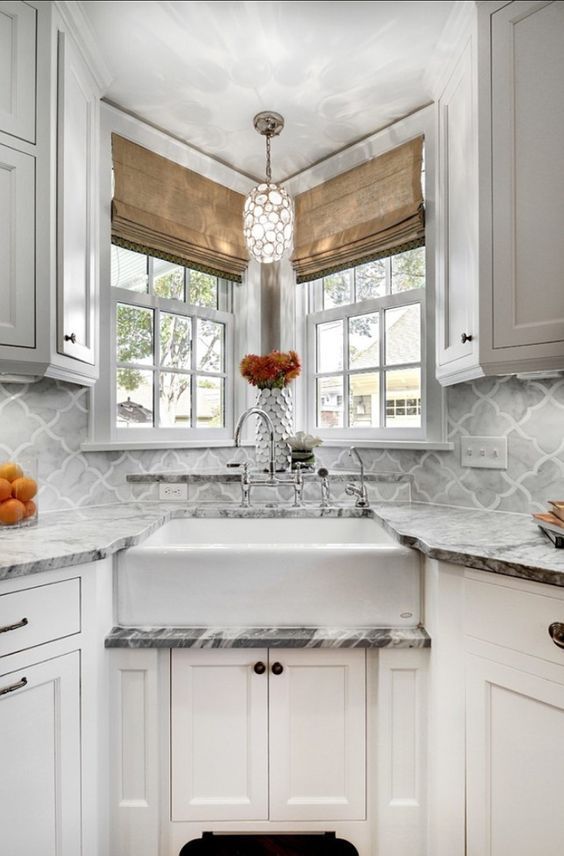


Corners also accumulate dirt and grime more easily, as they're often hidden and hard to reach. This can make cleaning more challenging, and may require specialized tools to clean effectively.
Winkel Cabinets and Countertops
Corner sinks require cabinetry and countertops that are designed to fit around them, which can limit your choices and increase costs. Standard cabinets and countertop materials may not be suitable and could require custom adjustments or additional components.
Additionally, the corner design can make it more difficult to replace or upgrade your cabinets or countertops in the future, as you may need to find pieces that match the sink's unique configuration.
Potential for Water Damage
Due to their location in the room, corner sinks can be more susceptible to water damage. Any leaks from the sink, pipes, or faucet can go unnoticed for longer periods and potentially cause significant damage to the surrounding walls, floors, or cabinetry before they are detected.
Furthermore, water can become trapped in the corners, leading to mold and mildew growth if not properly sealed and maintained.
A thorough understanding of the pros and cons of corner sinks can help you make the right decision for your space. While they offer significant advantages in terms of space optimization, design, and versatility, it's crucial to also consider accessibility, maintenance, and potential water damage. By weighing these factors, you'll be well-equipped to choose the perfect sink for your needs and create a functional, aesthetically pleasing space.
Related Articles

Prep Sink Pros and Cons: Weigh Your Options
When it comes to kitchen design, there's a bewildering array of choices, from cabinets to countertops, and one of the most pivotal decisions is choosing...

Under Sink Water Heater Pros & Cons: Weigh Your Options
When it comes to efficient water heating in compact spaces, under sink water heaters have become a popular solution. With their space-saving design and...

Pros and Cons of Double Sink: Weigh Your Kitchen Options
Tired of queuing up at the sinks in a rush, vying for a spot to wash your hands or rinse dishes? It might be high time you consider the space-saving and...

Island Sink Pros & Cons: Weigh Your Options
Are you considering installing an island sink in your kitchen but feeling a bit uncertain? You're not alone. Island sinks have been a popular choice for...

Island Stove Pros & Cons: Weigh Your Options
Embarking on an island adventure? The choice between a propane or electric island stove is a crucial one, with each option packing its unique set of advantages...

Weighing Butcher Block Countertops: Pros and Cons for Your Kitchen
Are you contemplating a butcher block countertop for your kitchen? This natural, durable material is a popular choice among homeowners, offering a blend of...