Spain's ABCs: A Full Alphabetical Journey المؤلف
The Spanish alphabet, much like its English counterpart, consists of 26 letters. However, there are some distinct features that set it apart, making it both fascinating and unique for English speakers to learn. Let's embark on a journey from 'A' to 'Z', delving into the intricacies of the Spanish alphabet.
Despite sharing many similarities with the English alphabet, the Spanish one presents some intriguing variations. Notably, it introduces four new letters - ñ, ü, ñ, and ch - each offering a distinctly Spanish flavor to words. Let's explore these letters in detail, along with the rest of the alphabet.
Vowels and Consonants in Spanish
The Spanish alphabet is made up of 5 vowels and 21 consonants. Unlike English, it does not distinguish between uppercase and lowercase letters in terms of vocabulary. This means that 'A' and 'a', for instance, are considered the same letter.


Vowel sounds in Spanish are produced further back in the mouth compared to English, giving Spanish speech a unique musicality. Let's explore the vowels and some common consonant sounds in Spanish:
Vowels in Spanish
The five vowels in Spanish are 'a', 'e', 'i', 'o', and 'u'. Each has a distinct sound and is pronounced similar to how they are in Italian. For example, 'a' as in 'cat', 'e' as in 'echo', 'i' as in 'machine', 'o' as in 'open', and 'u' as in 'flute'.


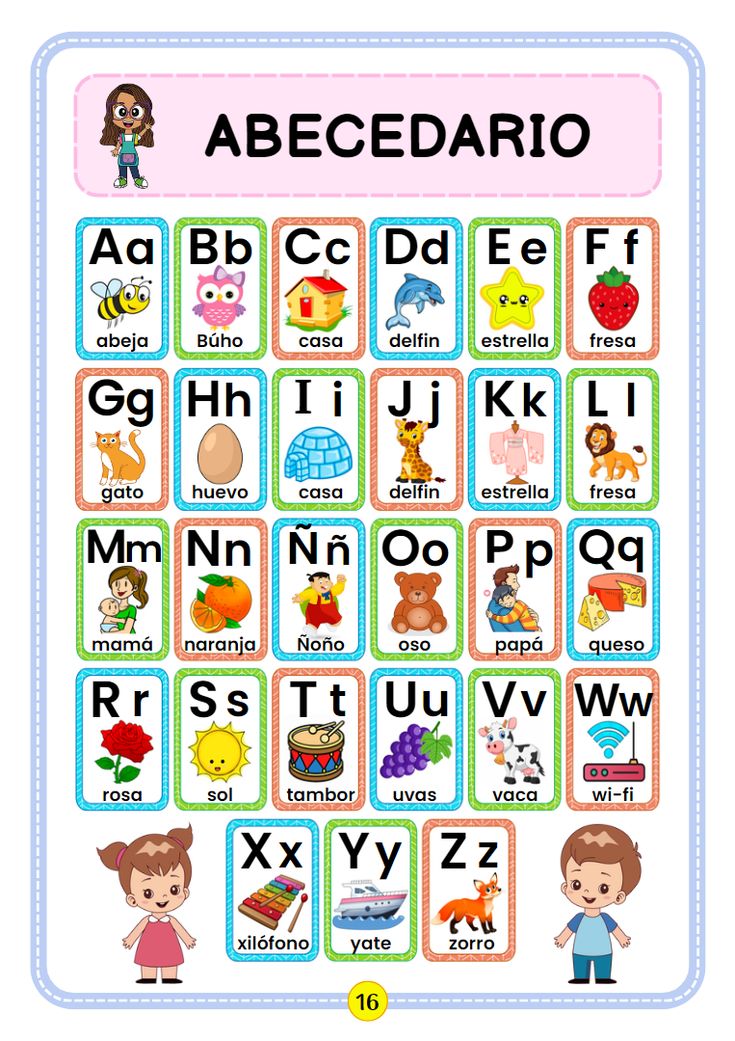
When learning Spanish vowels, it's crucial to practice their pronunciation. One helpful trick is to associate each vowel sound with a similar-sounding English word. For instance, the Spanish 'a' sound can be approximated with the 'a' in 'dance'.
Consonants in Spanish
Spanish consonants are pronounced clearer than in English. For example, the 's' in Spanish is always a hissing sound, unlike the soft 's' in English words like 'sugar'. Let's look at some common Spanish consonants:
- 'b' as in 'baby', but with the lips pursed together and the breath expelled.


- 'c' before 'e' or 'i' is pronounced as 'k', as in 'kitchen'. Before 'a', 'o', or 'u', it's pronounced as 'th', as in 'thanks'.
- 'g' before 'e' or 'i' is pronounced as 'h', as in 'hot'. Before 'a', 'o', or 'u', it's pronounced as a hard 'g', as in 'go'.
- 'j' is always pronounced as an 'h', as in 'hot'.


- 'l' and 'r' can be challenging for English speakers. Practice with words like 'luna' (moon) and 'rojo' (red) to distinguish between the two.
- 'z' is always pronounced as 'th', as in 'think'.
Unique Letters in Spanish
Now, let's delve into the four unique letters that set the Spanish alphabet apart from its English counterpart:
Ñ (olla ignored niña)
The letter 'ñ' is unique to Spanish and occurs frequently in words. It's pronounced similarly to 'ny' in English, combining the 'n' and 'y' sounds. For example, in 'miña' (my little girl), 'ñ' is pronounced like 'ny' in 'canyon'.
Practice making the 'ny' sound with Spanish words like 'caminar' (to walk), 'niño' (boy), and 'señora' (lady).
Ü (tubecito)
The 'ü' is another letter exclusive to Spanish. It's similar to the 'u' sound but with a slight 'u' sound afterwards. It's pronounced like 'ooy', as in 'toy'. This letter appears less frequently, often in loanwords from other languages, such as 'torta' (cake).
Practice making the 'ooy' sound with Spanish words like 'tubecito' (small tube) and 'flúor' (fluoride).
CH (chedar)
The letter 'ch' in Spanish is not silent as it is in English. Instead, it's pronounced as 'ch' in 'chat', like a cat hissing. For example, in 'chile' (chili pepper), the 'ch' is pronounced like the 'ch' in 'chat'.
Practice making the 'ch' sound with Spanish words like 'chicle' (gum), 'chiquita' (small), and 'manchón' (pile).
RH (río)
In Spanish, 'rh' is often used to represent a trilled 'r' sound. Thisgzsezzs a single rolled 'r' sound, made with the tongue tapping against the roof of the mouth. It's quite distinct from the 'r' sound in English.
Practice making the rolled 'r' sound with Spanish words like 'río' (river), 'carro' (car), and ' кавалеро' (cavalier). Remember that the 'rh' combination isn't always present; it's simply a notation to show the trilled 'r' sound.
The Spanish alphabet is a rich and vibrant collection of letters, each with its unique sound and character. Learning the Spanish alphabet is the first step towards mastering the Spanish language. Practice the pronunciation of each letter, and don't hesitate to ask native speakers or use language learning tools for guidance. ¡Buena suerte! (Good luck!)
Related Articles

Write English to Spanish Letters
Communicating effectively in today's interconnected world often requires understanding and expressing yourself in multiple languages. When it comes to...

Numbers Before Letters: The ABCs of Sorting
When dealing with alphanumeric data, a common question arises: when sorting, do numbers come before letters? The answer is a bit more complex than a simple yes...

Putting Letters in Alphabetical Order
Ever found yourself scratching your head over a crossword puzzle, stumped by a clue like "Putting in order from A to Z" or "Arrangement from start to finish"?...

Tracing Alphabet's Journey: A to Z in One Sentence
Imagine crafting a sentence that encapsulates all 26 letters of the English alphabet in one fell swoop. It's a linguistic challenge that's certainly not...

Baby ABCs: Alphabetical essentials for your little one
Shopping for baby items can be a delightful experience, with a wide array of products available to enhance your little one's comfort and development. To...

Alphabetized Things: In Order, A to Z
The alphabetical order is a fundamental concept in language and data organization that we often take for granted. It's a practical way to arrange information...