Food Inventory Formula: Simplify Stock Management
Imagine you're a restaurant owner or a grocer. One of your most pressing concerns each day is maintaining optimal food inventory levels. That's where the food inventory formula comes into play. This simple yet powerful tool helps you manage your stock efficiently, reduce waste, and enhance your bottom line. Let's delve into the intricacies of this essential resource.
At the heart of any inventory management system lies the inventory turnover ratio. Food inventory formula relies heavily on this ratio to determine how quickly you sell your perishable and non-perishable items. Understanding how to calculate and interpret this ratio is key to effectively managing your food inventory.
Understanding the Inventory Turnover Ratio
The inventory turnover ratio is a performance metric that gauges the number of times a business sells and replaces its inventory in a given period. It's calculated using the cost of goods sold (COGS) and the average inventory value.


Here's the simple formula: Inventory Turnover Ratio = Cost of Goods Sold / Average Inventory Value.
Calculating the Cost of Goods Sold (COGS)
COGS is the direct cost of producing the goods or services sold by a business. For perishable food items, this could include the cost of raw ingredients, labor, and packaging. For non-perishable goods, it might also include distribution costs.


To calculate COGS, subtract the beginning inventory (value of inventory at the start of the period) from the ending inventory (value of inventory at the end of the period), then add the cost of purchases (or procurement cost) throughout the period.
Determining the Average Inventory Value
The average inventory value is the average of the beginning inventory value and the ending inventory value. This average is used in the inventory turnover ratio formula to account for fluctuations in inventory levels over the year.
For example, if your beginning inventory value is $5,000 and your ending inventory value is $8,000, your average inventory value would be ($5,000 + $8,000) / 2 = $6,500.


Interpreting the Inventory Turnover Ratio
Once you've calculated your inventory turnover ratio, how do you interpret it? A high turnover ratio indicates that you're selling your inventory quickly, while a low turnover ratio suggests that your inventory is moving slowly.
For instance, if your COGS is $100,000 and your average inventory value is $25,000, your inventory turnover ratio would be 4 ($100,000 / $25,000). This would typically indicate a healthy inventory turnover rate.
Setting Optimal Inventory Turnover Ratio
The optimal inventory turnover ratio varies depending on your industry and business size. For example, grocers might aim for a turnover ratio of 18-24, whereas restaurants would likely look at a slower turnover rate of around 3-5.


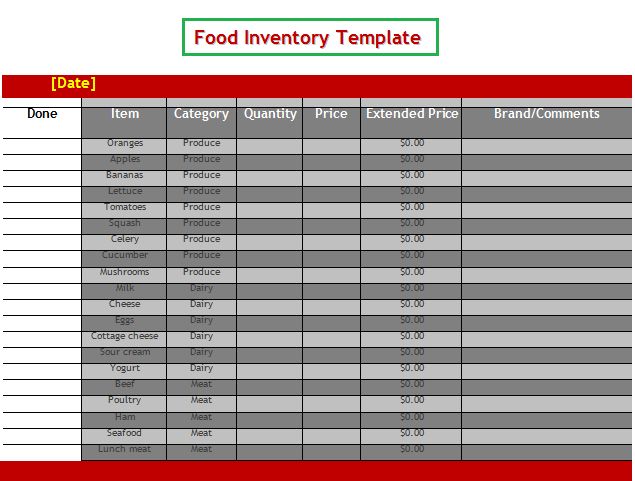
Remember, an inappropriate inventory turnover ratio can lead to significant problems. A ratio that's too high might indicate excessive waste due to frequent restocking, while a ratio that's too low could suggest stockouts and dissatisfied customers.
It's crucial to regularly review and optimize your inventory turnover ratio to ensure your food business is running efficiently. By effectively managing your food inventory using this formula, you'll reduce waste, minimize costs, and maximize your profit margins. So, start crunching those numbers today and watch your food business thrive!
Related Articles

Restaurant Inventory Template Excel: Streamline Your Food Stock Management
Mastering restaurant inventory management is a critical aspect of ensuring profitability and efficiency in your culinary establishment. One powerful tool to...

Office Supplies Inventory List Template: Simplify Your Stock Management
Maintaining an efficient office requires careful management of your office supplies. Thorough planning and organization are key, and a comprehensive office...
Inventory System for Food Management 2023
The efficient management and organization of food inventory is a critical aspect of the food industry, ranging from small-scale operations to large-scale...

Food Inventory Turnover Formula: Boost Profits with Effective Tracking
Effectively managing your restaurant's inventory is a crucial aspect of successful business operations. One key metric that helps gauge the efficiency of this...

Restaurant Inventory Template: Streamline Your Stock Management
Managing and tracking inventory is a critical aspect of running a successful restaurant. It ensures that you have the right ingredients on hand to serve your...

Streamline Food Pantry Management: Inventory Sheet Templates
In the realm of nonprofits and community service, tracking resources is a crucial task, especially for food pantries where efficiency and organization can...