Restaurant Employee Manual Examples
A comprehensive, well-crafted employee manual is an essential tool for any restaurant, ensuring uniform standards, promoting consistency, and enhancing overall operations. It serves as a blueprint for new hires, a reference for seasoned staff, and a testament to your establishment's brand and culture. Let's dive into some key sections and restaurant employee manual examples that could inspire your own.
Employee manuals can range from minimalistic guides to exhaustive handbooks, but they all share the common goal of standardization. A well-structured manual covers essential aspects such as mission and values, hiring and onboarding, job descriptions, policies, procedures, and safety guidelines. Let's explore these areas in detail.
Creating Your Restaurant's Identity
ವಿವ Without a doubt, your restaurant's mission, values, and culture are reflected in every aspect of your operations. Clearly stating these in your employee manual is the first step in ensuring every team member understands and embodies your establishment's DNA.


For instance, if you're a farm-to-table restaurant, highlight your commitment to sustainability, local sourcing, and environmentally conscious practices. If you're known for exceptional customer service, emphasize hospitality, attentiveness, and going the extra mile. Here's an example of expressing your restaurant's mission and values:
| Our Mission | Our Values |
|---|---|
| To serve the best locally-sourced, organic meals with unparalleled hospitality. | Excellence in food and service Honesty and integrity Sustainability in all operations Caring for our team and community |
Defining Roles and Responsibilities
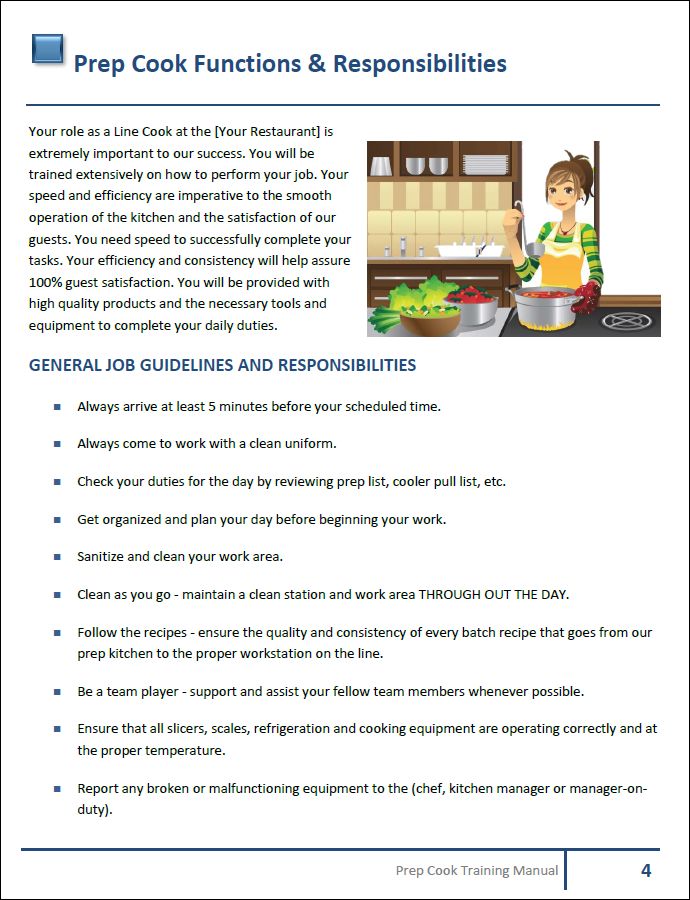
Clearly outlining job descriptions, expectations, and key performance indicators (KPIs) is vital for maintaining efficiency and consistency. Your manual should include detailed breakdowns of roles, from front-of-house to back-of-house positions. Here's an example of a job description for a server:


- Greet guests enthusiastically and promptly
Explain daily specials and make informed drink recommendations
Take and deliver orders accurately
südlich Clear tables efficiently and neatly
Handle guest complaints professionally
Meet KPIs such as a signification number of tables turned within a shift and achieving a certain percentage in sales
Policies and Procedures
Establishing and communicating robust policies and procedures ensure consistency and fairness. Some key areas to cover include:
- Attire and grooming: Specify your dress code, including uniforms, shoes, hairstyles, and jewelry. For example, "Uniforms must be worn at all times. Hair should be neatly tied back, and facial piercings should be minimal."
- Timekeeping and attendance: Detail your restaurant's policy on punctuality, time-off requests, and no-shows.
- Disciplinary procedures: Outline the steps taken if an employee's performance or behavior falls short, from verbal warnings to terminations.
Here's an example of an attire policy:
"Employees must adhere to our dress code policy at all times. Approved shirts, pants, aprons, and name tags will be provided by the restaurant. Closed-toe shoes, black or white, are required. NoFlip-flops, open-toed shoes, or high heels are permitted. Jewelry should be minimal and discrete. Tattoos must be covered."


Upholding Safety and Compliance
Ensuring the safety of your employees and guests should be a top priority. Your manual should detail emergency procedures, food safety guidelines, and federal labor laws. Let's explore these in more depth.
Food Safety and Hygiene
Highlight the importance of food safety and provide clear instructions on proper food handling, storage, and preparation. Include a section on allergens to minimize the risk of cross-contamination. Train staff on spotting signs of spoilage and attitudes towards cleanliness. Here's an example of a food safety protocol:
- Wash hands thoroughly after handling raw meat, poultry, or seafood.
- Store food at proper temperatures: below 40F (4.4C) for cold food and above 140F (60C) for hot food.
- Use separate cutting boards for raw meat and produce.
- Know and follow proper cleaning procedures for kitchen equipment and utensils.
Emergency Procedures
Prepare your team for potential emergencies by providing clear instructions on what to do in case of fires, medical emergencies, or act of God situations. Ensure all staff, particularly those in managerial positions, are trained in first aid and CPR. Here's an example of a fire evacuation plan:


- Upon hearing the fire alarm, remain calm and proceed immediately to the designated exit.
- Do not use elevators. Take the nearest stairway and move quickly but safely.
- Once outside, move far away from the building and await further instructions from management or emergency services.
Finally, remember that an employee manual is a living, breathing document. Regularly review and update it to reflect changes in your restaurant's operations, policies, or the law. Train your staff annually to ensure they're up-to-date with the latest version. Don't shy away from making your manual engaging and accessible, using tables, charts, and visuals where appropriate. After all, an informed team is a successful team. And as your employees grow with your restaurant, so should their manual.
Related Articles

Restaurant Employee Manual PDF: Essential Guide for Staff
Welcome to our comprehensive guide on crafting an effective and engaging restaurant employee manual PDF. As a restaurant owner or manager, you understand the...
Restaurant Employee Manual Template
A comprehensive restaurant employee manual is a vital tool for ensuring consistency, fairness, and a well-informed workforce. It's not just a compliance...

Restaurant Kitchen Layout Examples
The heart of any restaurant lies in its kitchen, a workspace that must be both functional and efficient. A well-designed restaurant kitchen layout helps...

Bar Restaurant Manager Resume Examples
Safe to say, managing a bar and restaurant is no easy feat. It demands a unique blend of leadership, customer service, and culinary skills that can be hard to...

Complete Restaurant Employee Training Checklist
Transforming new hires into efficient, knowledgeable restaurant employees involves more than just onboarding. It's about providing the right training, at the...

Restaurant Staff Rules
Managing a restaurant is no small task. Getting the balance right between serving delicious food, maintaining high standards of customer service, and running a...