"Sample Food Inventory List"
A comprehensive food inventory list is indispensable for any commercial kitchen, restaurant, or catering service. It ensures consistency in meal preparation, prevents overstocking or understocking, and ultimately aids in cost control. Let's delve into the components of an effective food inventory list.
Before we begin, it's crucial to understand that a food inventory list should be dynamic, reflecting the ebb and flow of your business needs. Revisit and update your list regularly to ensure it remains relevant and comprehensive.
The Anatomy of a Food Inventory List
At its core, a food inventory list is a detailed record of all food items, their quantities, and relevant data. Here's a breakdown of essential components:


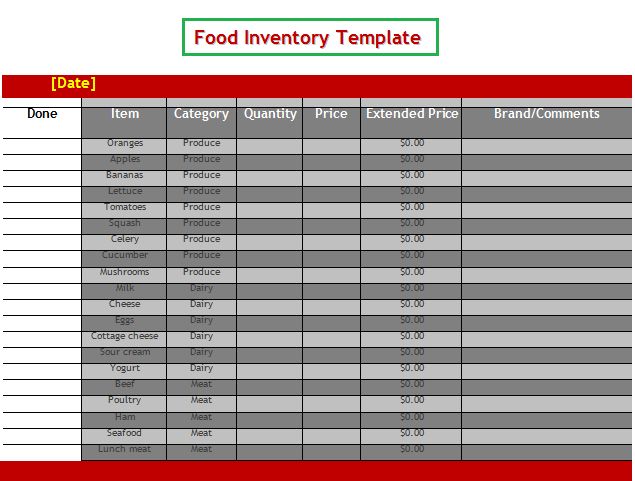
Firstly, it should include the item's name, description, and any specific details such as size, weight, or brand. Then, it should show the quantity on hand, reorder point, and quantity in stock. Lastly, it's beneficial to include the price per unit and the total cost of the item.
Categorizing Your Inventory
Categorizing food items could cluster ingredients by their usage, such as proteins, grains, vegetables, or spices. This approach enhances efficiency as it mirrors typical meal preparation. For instance, if you're preparing a chicken dish, you'd look under 'proteins' for chicken, 'grains' for rice, and 'vegetables' for bell peppers.


Alternatively, you could categorize items by their location in the storage area, such as dry goods, refrigerated items, or frozen foods.
Regularly Reviewing and Updating
Just like a cook needs to taste their dish to make adjustments, you must regularly review and update your food inventory list. This helps you identify trends in stock levels and usage, allowing you to make informed decisions about ordering and reorder points.
Additionally, seasonal changes in your menu require prompt update to your inventory list. Some ingredients that were once staple items might no longer be in high demand, while others may have increased popularity due to their inclusion in new dishes.


Expanding Your Food Inventory List
As your business grows, so might your food inventory list. New items could be added due to new dishes, suppliers, or customer preferences. It's essential to ensure your list remains manageable and comprehensive.
Consider adding columns for allergen information, to aid in food safety and preparation. Also, include columns for expiration dates and suppliers to streamline reordering.
Utilizing Technology
Digital platforms and inventory software can simplify managing your food inventory list. They offer features like automatic reordering, stock level tracking, and even temperature control monitoring for perishable items.




Moreover, they can provide detailed analytics on stock usage, allowing you to identify trends, predict needs, and ultimately optimize your inventory management. Some also offer direct integration with point-of-sale (POS) systems, providing real-time updates based on sales and usage.
Ultimately, a thorough food inventory list serves as the cornerstone of efficient, cost-effective, and safe food preparation. It's a robust tool that every food service establishment should harness to its fullest potential.
Related Articles

Kitchen Food Inventory: The Ultimate List
Every cooking enthusiast and professional knows that a well-stocked kitchen begins with an inventory list. A comprehensive inventory list is not just a useful...
Essential Sample Restaurant Inventory List
Running a successful restaurant involves meticulous planning and management, with inventory tracking standing out as a crucial aspect. Maintaining a...
Ultimate Sample Pantry Inventory List
Keeping track of your pantry inventory can save you time, money, and prevent food waste. It helps you plan meals, ensures you have necessary ingredients, and...
Food Inventory List Example
Ever found yourself rummaging through your pantry, only to realize you're missing a crucial ingredient for tonight's dinner? A food inventory list is your...

Food Inventory List Template
Keeping track of food stock is a crucial aspect of any kitchen, be it at home or in a bustling restaurant. An effective food inventory list template can save...

Effortless Food Inventory Tracking: Sample Spreadsheet
Tracking the inventory of a bustling restaurant or cafeteria can be an uphill task, especially when done manually. This is where a sample food inventory...